A Two-Step Approach to Sorting Family Photos: How to Organize, Curate, and Preserve What Matters Most
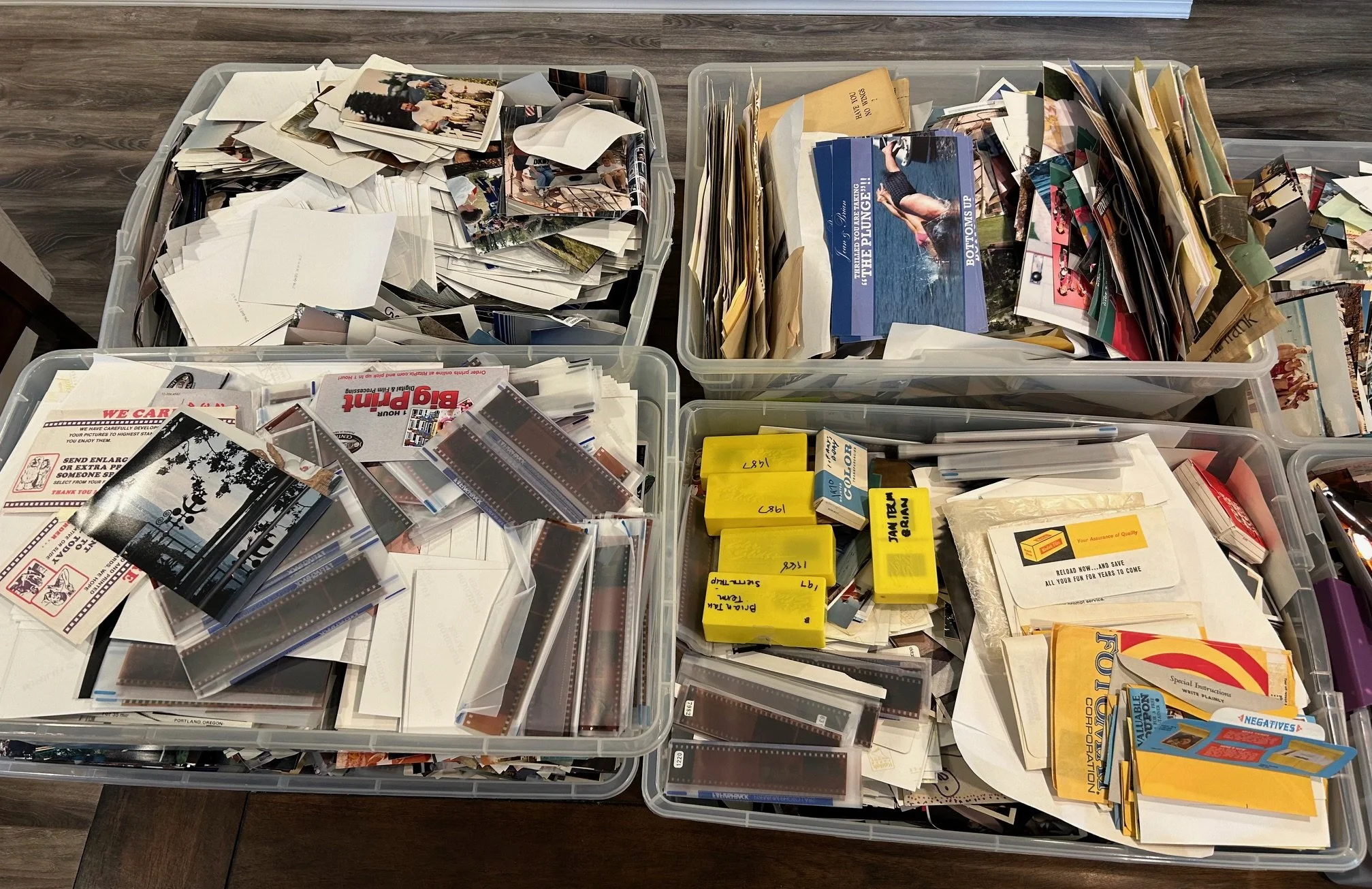
Sorting old family photos can feel like standing at the edge of something vast. You may have photos in many places: there are boxes from closets, albums from attics, envelopes tucked into drawers, digital folders filled with scans you meant to rename. You may have decades of birthdays, holidays, graduations, everyday life, all waiting to be organized.
When families begin organizing their photos, they often think they must immediately decide:
What stays?
What goes?
What truly matters?
But thoughtful photo preservation doesn’t begin with difficult decisions.
It begins with clarity.
A simple two-step approach to sorting family photos can transform overwhelm into intention. The first step is broad and structural. The second is objective and values-based.
Together, they allow you to build a cohesive family photo archive that tells your story.
Step One: Sorting Your Photos Into Broad, Subject-Based Categories
The first stage of organizing family photos is expansive and non-judgmental.
At this point, you are not eliminating. You are not critiquing quality. You are not choosing “the best.”
You are simply creating order.
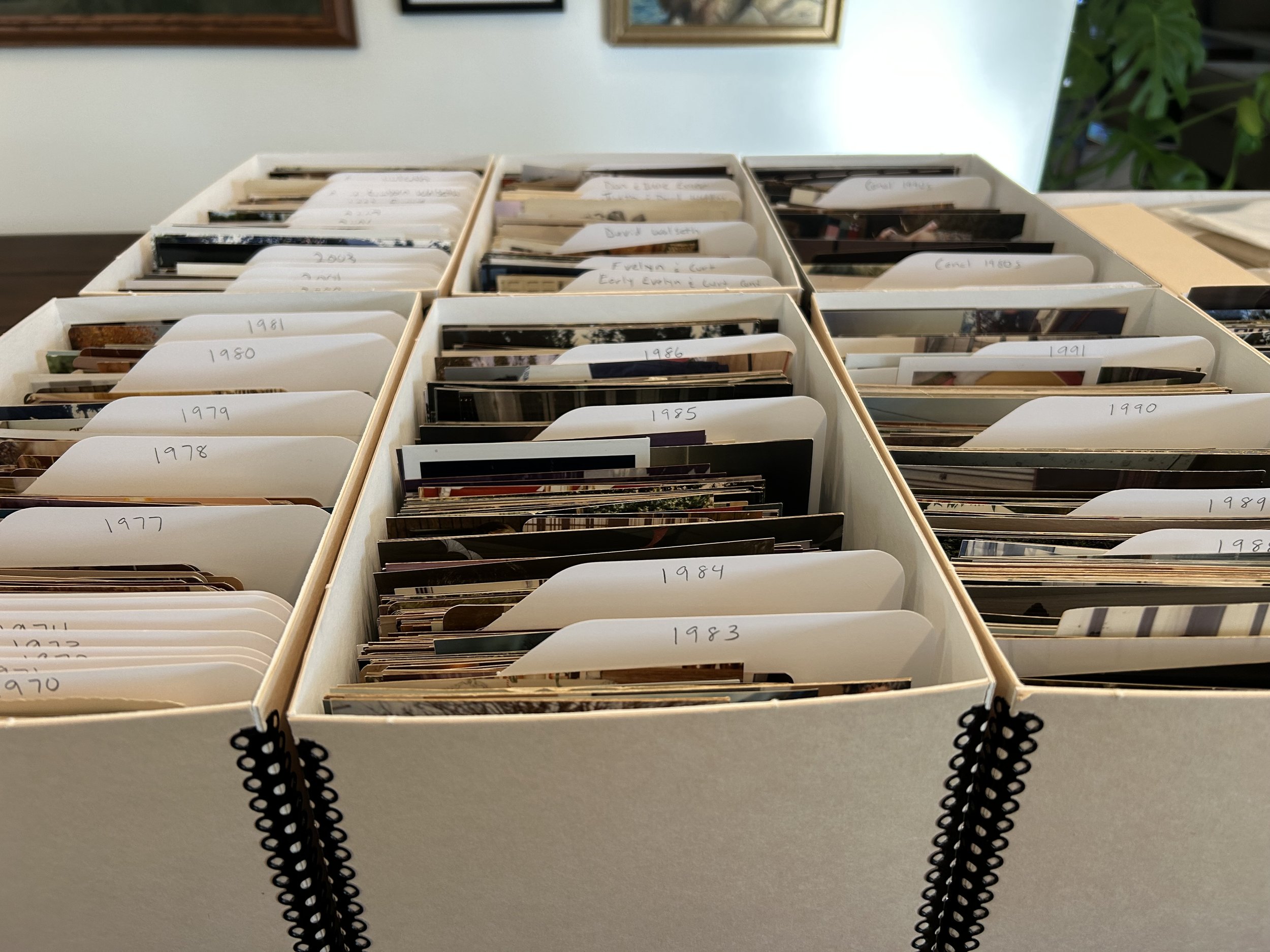
Sort Photos by Categories, Not by Individual Images
Begin by grouping photos into broad categories such as:
Chronology (decade or year)
People (grandparents, parents, children)
Events (weddings, holidays, graduations)
Themes (travel, military service, homes, everyday life)
If dates are unclear, approximate time periods are perfectly acceptable. Precision can come later.
This stage reduces visual overwhelm. Instead of facing 2,000 unrelated images, you are looking at one contained group such as “1970s Holidays”, “Family Travel” or “Dad’s Childhood.”
Suddenly, the process feels manageable.
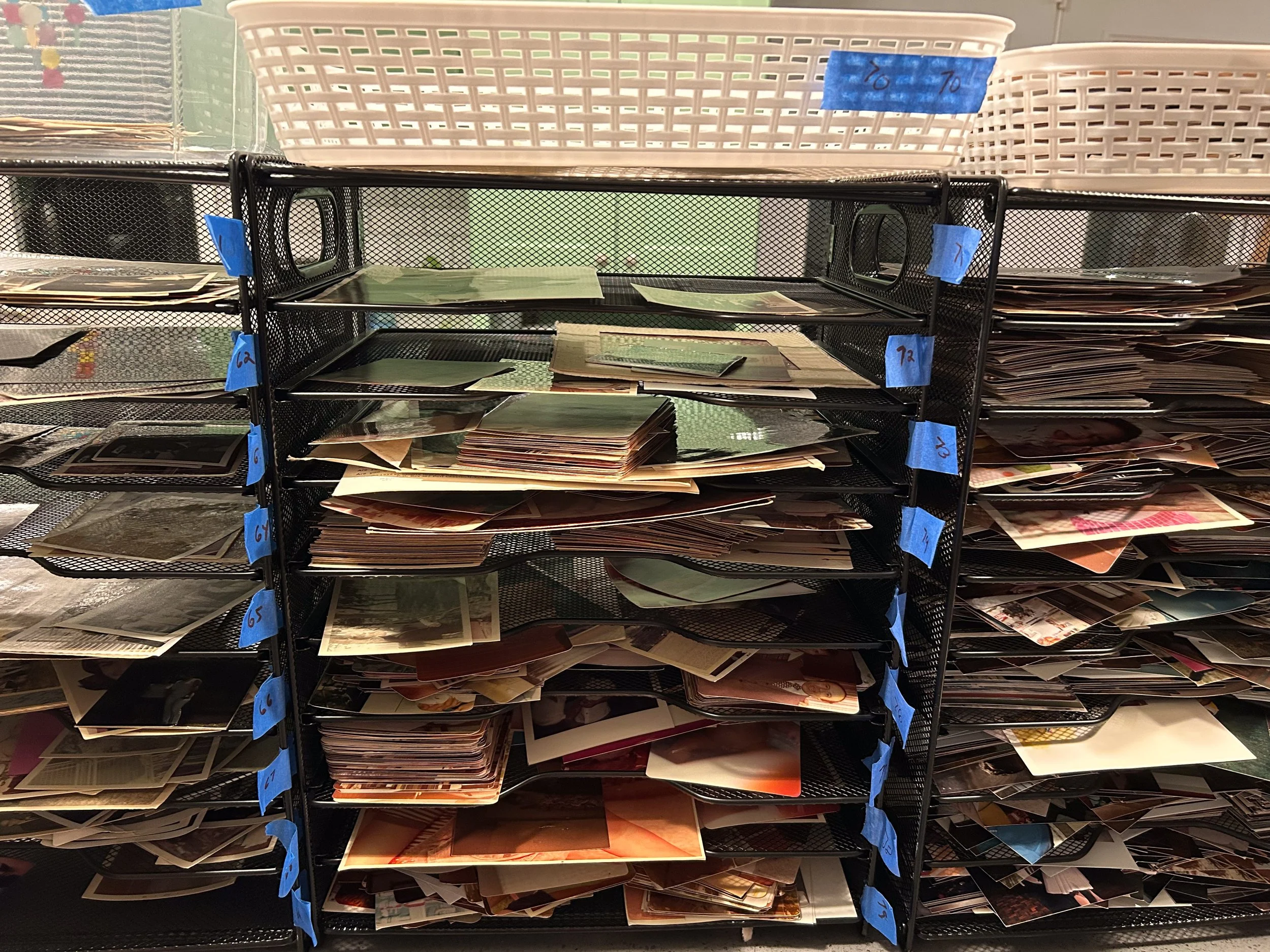
Broad Categories Help When Organizing Photos
Broad sorting:
Reveals patterns across generations
Preserves contextual relationships between images
Builds emotional distance before making harder decisions
This stage creates structure without pressure. And for many families, that alone brings relief.
Step Two: Objective & Values-Based Photo Curation
Once your photos are grouped, the second stage begins: thoughtful refinement. Now we move from organized to curated. The questions shift from: “What is this?”to “What does this contribute?”
This stage combines objectivity with family values to help you decide what to keep in your family archive.
1. Which Photos Tell the Story?
Every family photo collection contains a narrative.
Within each category, identify the images that best capture:
Milestones (weddings, births, moves, graduations)
Transitions (aging, career changes, new homes)
Relationships (siblings together, multiple generations)
Everyday life (kitchens, backyards, neighborhood scenes)
When sorting old family photos, you are not just preserving faces, you are preserving context and continuity.
Ask yourself: If someone unfamiliar with our family viewed this group, which images would help them understand who we were? Those are your anchors.
2. Which Images Are the Strongest Representations of My Photo Collection?
Events often generate dozens of nearly identical photographs.
Instead of keeping them all, compare them side by side:
Which is sharpest?
Where are expressions most natural?
Is everyone visible?
Does one image simply feel stronger?
Choose the clearest, most representative image will help bring focus to your collection.
When organizing family photos for long-term preservation, clarity carries more weight than volume. But don’t forget those candid moments which often tell the story better than the posed portraits.
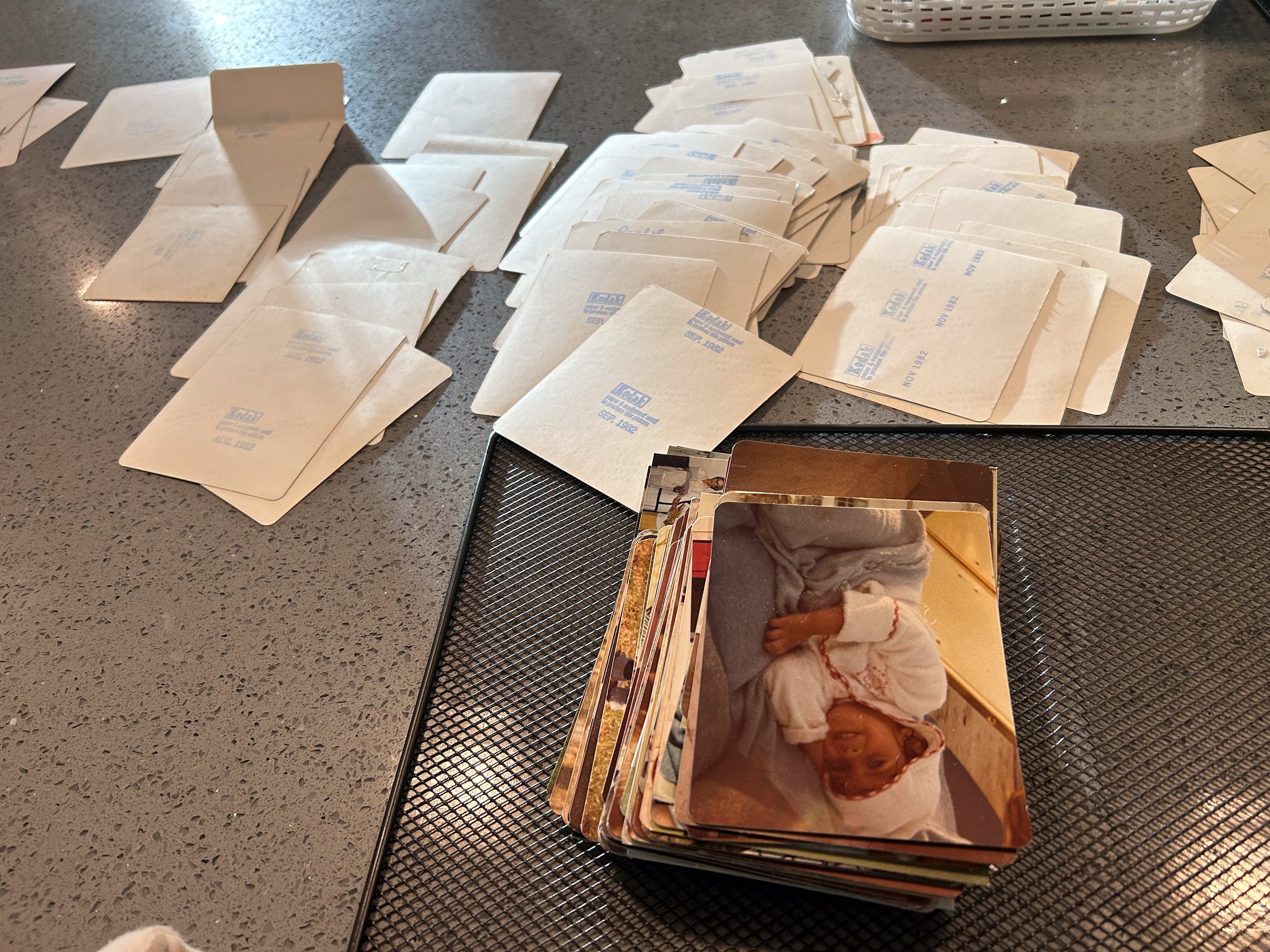
3. Which Photos Provide Context For Your Story?
Some of the most historically valuable images are not posed portraits at all.
They are:
The exterior of a childhood home
A storefront that no longer exists
A grandparent’s kitchen
A street scene in a city your family once called home
These environmental details ground your family history in place and time. A strong family photo archive balances portraits, with candids, with scene setting photos. Together, they tell a richer story.
4. Which Photos Can Be Gently Culled?
Culling is often the most emotionally challenging part of sorting family photos. But thoughtful reduction strengthens an archive.
Consider removing:
Blurry or out-of-focus images
Exact duplicates
Accidental exposures
Photos with no identifiable subject or context
If discarding originals feels difficult, digitize first. Once high-quality digital files exist, decisions often feel less final.
Curation is not about minimizing memory. It is about refining meaning.
It is Important to Balance Emotion and Objectivity When Organizing Photos
Organizing old photos is deeply emotional work. You may feel nostalgia. You may hesitate to let anything go. You may feel responsibility to preserve everything.
That is why separating the process into two distinct stages is so powerful.
Stage One protects emotion.
Stage Two introduces intention.
By the time you begin culling, you are no longer reacting to chaos. You are making thoughtful, values-driven decisions.
Two Stage Photo Sorting Leads to a Cohesive, Meaningful Family Archive
When both stages are complete, what remains is not just a smaller collection, it is a clearer one.
You will have:
Defined categories
Strong representative images
Preserved contextual photographs
Reduced redundancy
A collection ready for digitization or archival storage
Most importantly, you will have shaped how your family story is told.
A Gentle Invitation to Start Sorting Your Photos
If you are feeling unsure where to start, begin small. Choose one manageable group; perhaps one album or one decade.
First, sort broadly. Then, refine thoughtfully.
Two steps. Clear structure. Intentional preservation. Over time, the process becomes less overwhelming and more reflective. Sorting family photos is not just about organizing the past, it is about preparing it for the future.
If you find yourself stalled midway through the process and are uncertain about what to keep, how to digitize properly, or how to create a cohesive family archive, please know that you are not alone.
At The Family Archivists, we guide families through organizing, digitizing, and preserving their photographs with care and intention. Whether you need structure, technical expertise, or simply a thoughtful partner in the process, support can make all the difference.
Your family history deserves to be preserved in a way that feels both manageable and meaningful and we are here to help!